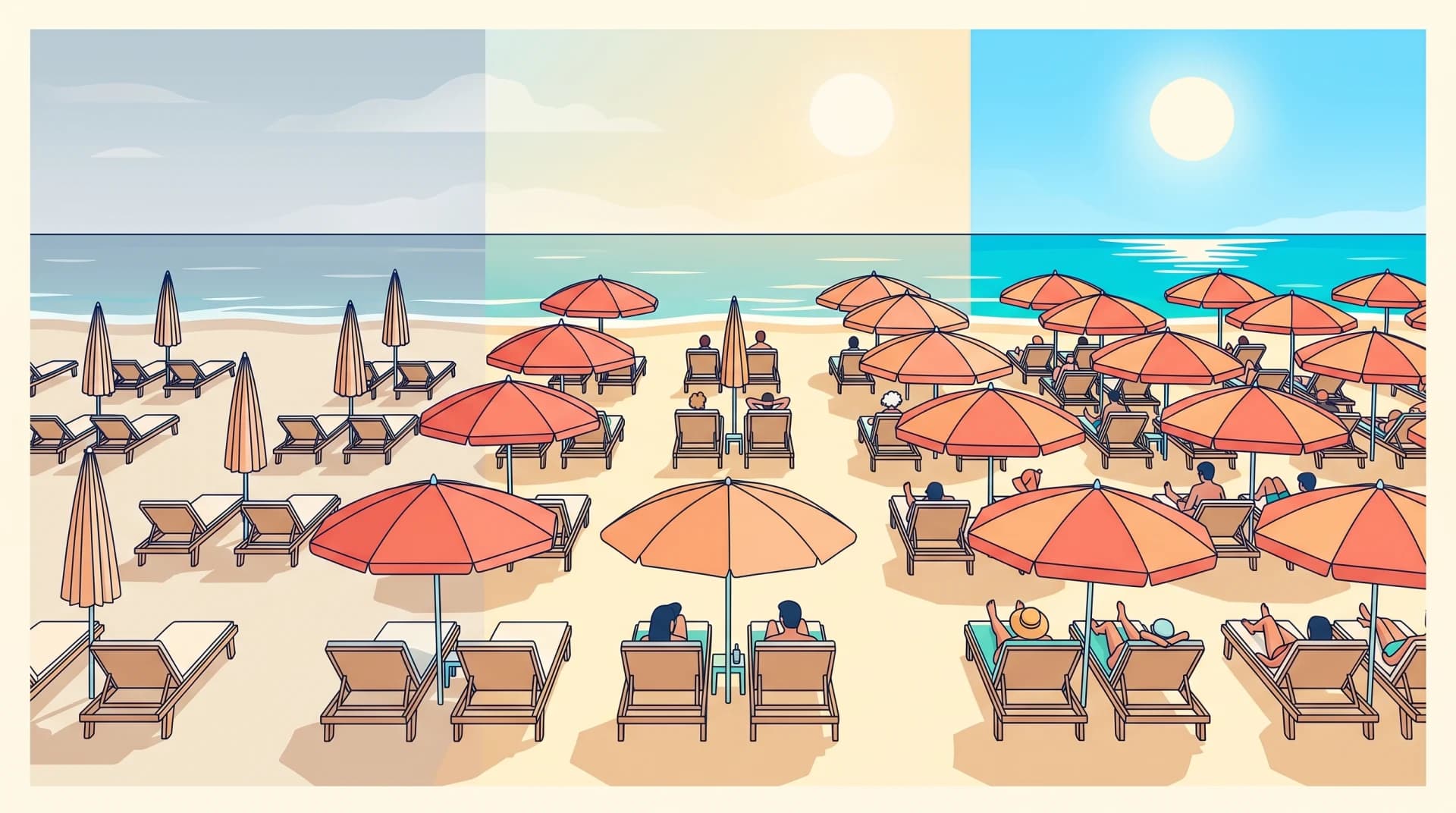
Every sunbed zone is a small business: its own brand, hours, and staff
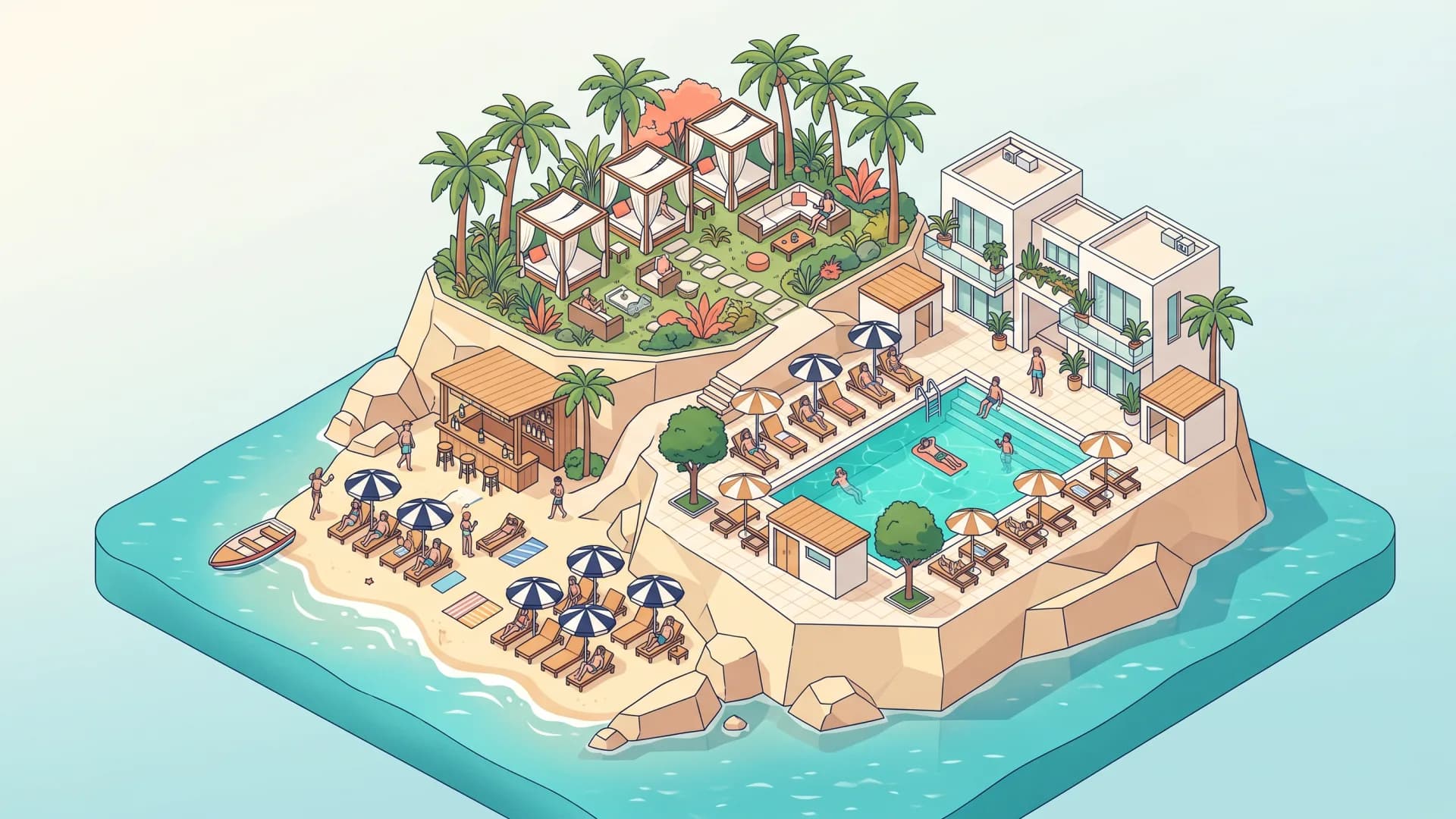
Out front you've got the good sunbeds — bar service, the sunset straight ahead. A little further back, a quiet sun deck for anyone escaping the crowd. And off in the corner, half a dozen Balinese daybeds you rent out at double the price, and they always sell out. Or maybe it isn't one spot but three: three beach concessions, each with its own name, that locals know as separate places. On paper, it's all sunbeds. On the sand, they have nothing in common.
The easy mistake is to lump them together: one booking form for everything, a single price, the same hours, and one attendant who sees it all. That's where the friction starts — the guest who wanted the pool ends up on the beach, the Balinese-daybed rate creeps into the regular sunbeds, your person in one zone is fiddling with another zone's bookings. The alternative is to treat each zone as what it really is: a small business with its own character. And to do it without running three programs or tripling the paperwork.
Its own address (and its own face) for each zone
The first thing your guest notices is where they land when they go to book. Each zone can have its own booking page, with its own short link — something like yoursite.com/levante-beach — that points only to those sunbeds. Put it on a sign, turn it into a QR code or share it on social media, and whoever scans it lands straight in the zone they came for, with no generic menu and no guessing.
And if your zones have their own identity, you can go one step further: switch on its own name, logo, and color on each one's booking form. It isn't on by default — you turn it on when you need it — but it changes the whole feel. Someone booking "Cala Serena" sees Cala Serena, not an anonymous template. For an operator running several beaches with names people already know, it's the difference between looking like one single thing and letting each spot stay its own.
Each attendant, only their own patch
Having several zones doesn't mean everyone sees everything. You assign each attendant the zone (or zones) they run, and on their phone only that shows up: their sunbeds, their bookings, their guests. The pool attendant doesn't get lost among the beach spots, and nobody touches what isn't theirs by mistake.
That boundary is what lets you hand out the work with peace of mind. Each person runs their own patch from their phone — seating, charging, releasing — while the big picture, all the zones together, stays with you. You delegate the day-to-day without letting go of control.
Hours and prices that don't have to match
The pool opens at eleven and the beach at nine; the VIP corner only rents by the full day, no half days. None of that has to be the same everywhere. Each zone sets its own time slots — morning, afternoon, full day — based on how it actually works, and the guest only sees the options that exist in the spot they picked.
Same goes for what it costs and how it looks. The Balinese daybeds have their rate, the front-row sunbeds theirs, and the ones behind a keener one. And each zone has its own map, with its own background color and its sunbeds placed where they really are, so setting it up and reading it at a glance is easy. Each area, in short, charges and opens its own way.
And the takings, zone by zone
If each zone is a small business, it makes sense to know how each one is doing. The day's summary doesn't hand you one blurry number: it breaks it down by zone, so you can see at a glance how much the beach brought in, how much the pool, and how much that corner that takes up four square meters and earns like ten.
With that in hand, decisions stop being hunches. You know where to add more sunbeds next year, which zone can take a price bump, and which one to look after. It's the same end-of-day close as always, but balanced piece by piece instead of all jumbled together.
In a hotel, exactly the same
You don't have to be a beach bar to run into this. A beachfront hotel usually has at least two different worlds: the concession area on the sand and the pool inside, each with its own hours, its own rules, and its own crowd. Sometimes there's a rooftop sun deck on top, or an adults-only pool. They're zones, and they deserve to be run as such.
The front desk hands out spots for each place without mixing them, each zone keeps its own rules, and the charge goes where it needs to — including the option to bill it to the room when the guest prefers. If you want to see how all of this fits a hotel, the logic is the same as on the beach: the whole is one thing, and each corner another.
Each zone on its own; you, with the full picture
Managing by zones doesn't multiply the work — it's the opposite: each area runs on its own, with its own face, its own hours, and its own person in charge, and the full picture reaches you without having to be in five places at once. You start with one zone, and the day you open the second, you already know you won't have to cram it inside the first.
Take a look at the plans and think about how many zones your business really has. It's almost always more than it seems — and each one, run well, does better on its own than tied to the rest.