How to keep your sunbed business under control without being on the beach
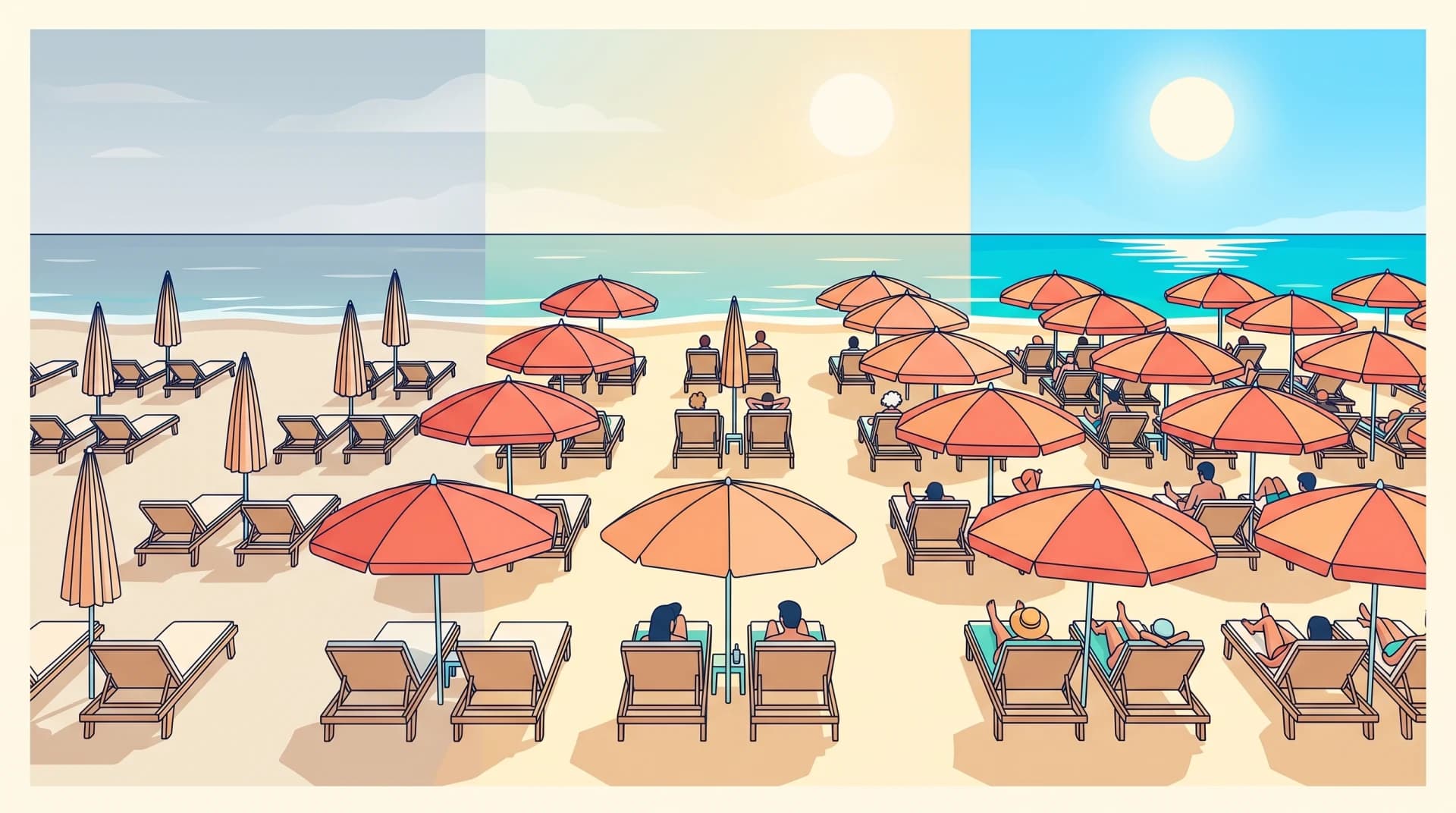
A Saturday in August, eleven in the morning. You've got three zones open, a member of staff in each one laying out sunbeds and taking payments, and a phone that won't stop ringing. One calls because a customer swears she paid yesterday; another, because he doesn't know whether the front row is booked or free. Meanwhile, you're trying to be in all three places at once. You can't, of course. Nobody can.
That's the ceiling for almost every sunbed business: they grow only as far as the owner's eyes can reach. Not for lack of customers, but because control depends on you being there. The good news is that it doesn't have to. Today you can know what's happening on every sunbed —who's on it, whether they've paid, how much has come in— without leaving wherever you are. The beach still needs hands; control doesn't.
What really keeps you stuck on the sand
If you think about it, what forces you to be there isn't the sunbeds. It's the information. It's scattered across each employee's head, the odd notebook and your own memory. To pull it together, you have to be there in person: asking, adding up, reconciling at close.
That's why it's so hard to delegate, open a second spot or take a weekend off. It isn't that you distrust your team; it's that the information doesn't live anywhere you can actually check it. The day all that data sits in one place —and you open that place from your phone— you no longer need to be there to be in control. So what do you need to see? Three things, basically.
The day's map: occupancy at a glance
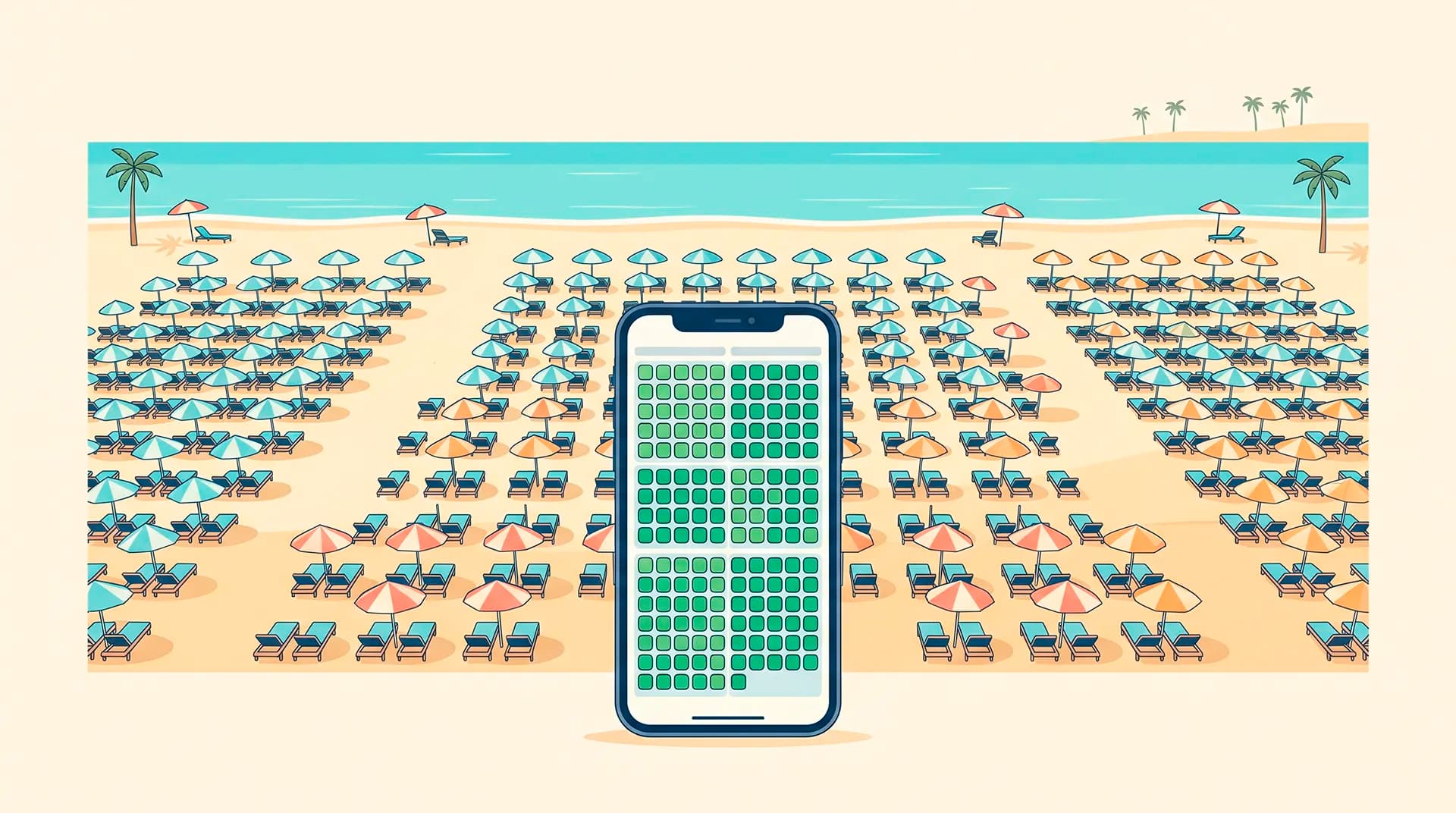
The first is knowing how the day is going without calling anyone. A map of your beach, with every sunbed drawn in its place, tells you: free, booked and occupied, each in its own color. You open your phone and, in two seconds, you see that the VIP zone is nearly full and that the back one still has room.
And if you want the detail, you tap a sunbed: who has it, what time they arrived, what state it's in. It's the difference between "I think today's going well" and "I'm at 80% with four left on the front row".
Cash reconciliation, zone by zone
The second is the money. The day's summary tells you how much has been booked and how much has been collected, broken down by zone, without counting notes or waiting until close.
This is where you catch discrepancies before they become a problem. The summary separates what's been collected from what's outstanding, no-shows and cancellations, so the classic cash slip-up jumps out at you: an occupied sunbed that nobody marked as paid. And since each zone usually has its own person in charge, you can see at once whether what came in from each one matches the sunbeds that were used. Export it to Excel or PDF for your accountant and you're done.
The status of every booking
The third is knowing, sunbed by sunbed, what's going on. Every booking has a status, and it isn't jargon: it's what tells you the story at a glance.
| Status | What it means |
|---|---|
| Confirmed | Booked; the customer hasn't arrived yet |
| Occupied | The customer is already on the sunbed (checked in) |
| Paid | Payment has been made |
| Checked out | The customer has left |
| No-show | The cutoff time passed and they didn't turn up |
| Cancelled | The booking was called off |
With the map's colors following those statuses, a single glance tells you what you can resell (a no-show that's been freed up), what you still have to collect and what's already closed.
Your team on the sand, you on the dashboard
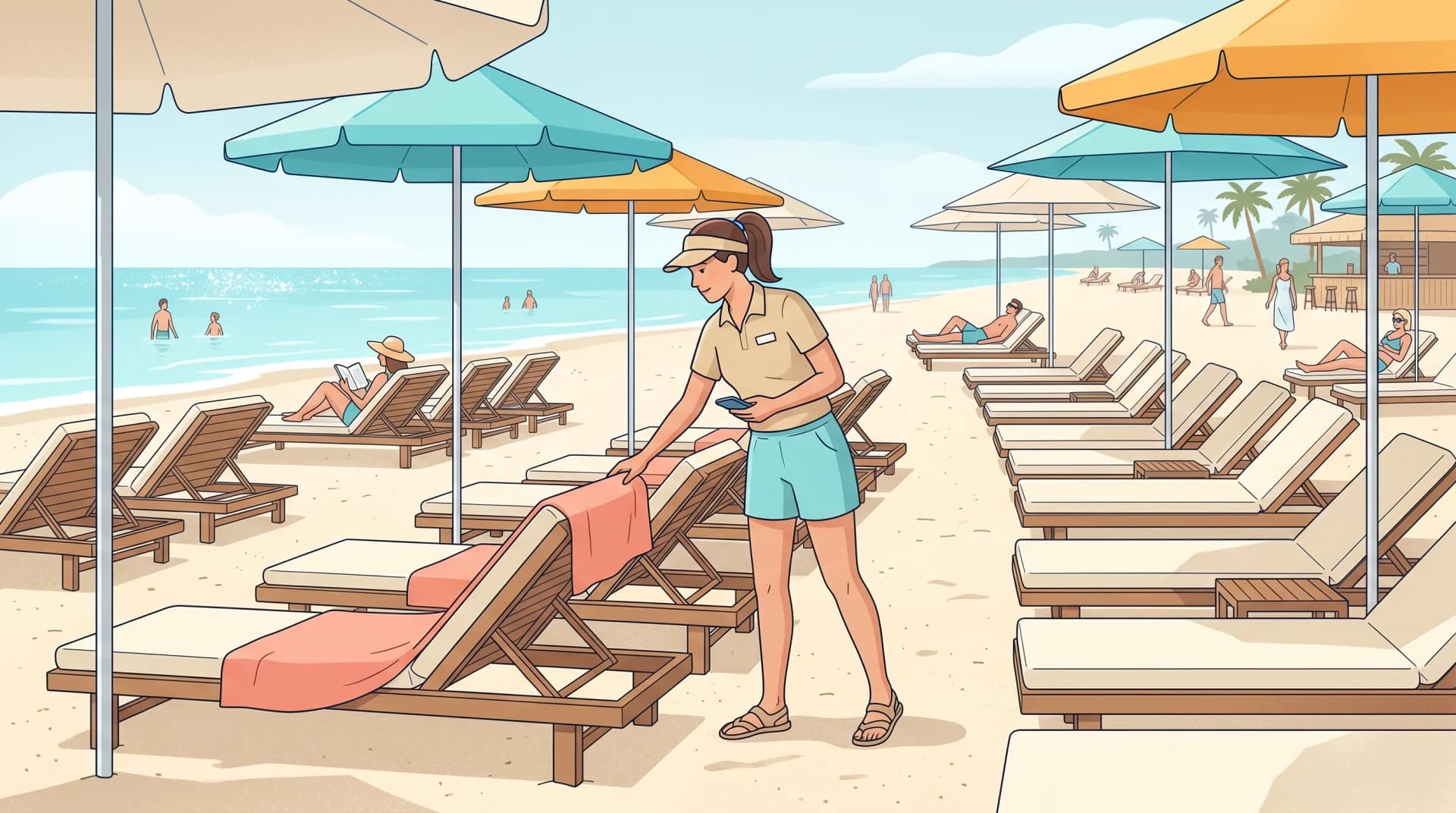
All of this works because the top and the bottom see the same thing. In the most common beach setup, each employee runs a zone and manages their bookings from their own phone, just like an old-school attendant: they note down the customer, check them in, take the payment. Everything they record shows up on your dashboard instantly.
And everyone sees just what they should. Your staff log into a panel limited to their job —their zone, their bookings, nothing else—; the full picture, with every zone and the entire day's takings, is yours alone. There's no trickle of alerts chasing you at all hours: there's one place —your phone, your tablet or your computer— that you open when it suits you and see exactly what you need. That's what being in control means: not the business interrupting you, but you being able to look whenever you like.
Where to start
You don't need to change how your team works on the sand or set up anything strange. Only one thing is needed: that the beach's information lives in one place you open from your phone, instead of scattered across notebooks and heads.
If you want to see how it fits your case, we've laid it out for beach businesses and for beach bars, and you can compare the plans to pick the one that suits your season.
In the end the idea is simple: the beach is for setting up sunbeds and looking after people well; control fits in your pocket. The day you separate the two, your business stops depending on you being stuck on the sand. And yes, you can open another zone —or take a Sunday off in August— without the takings suffering for it.